

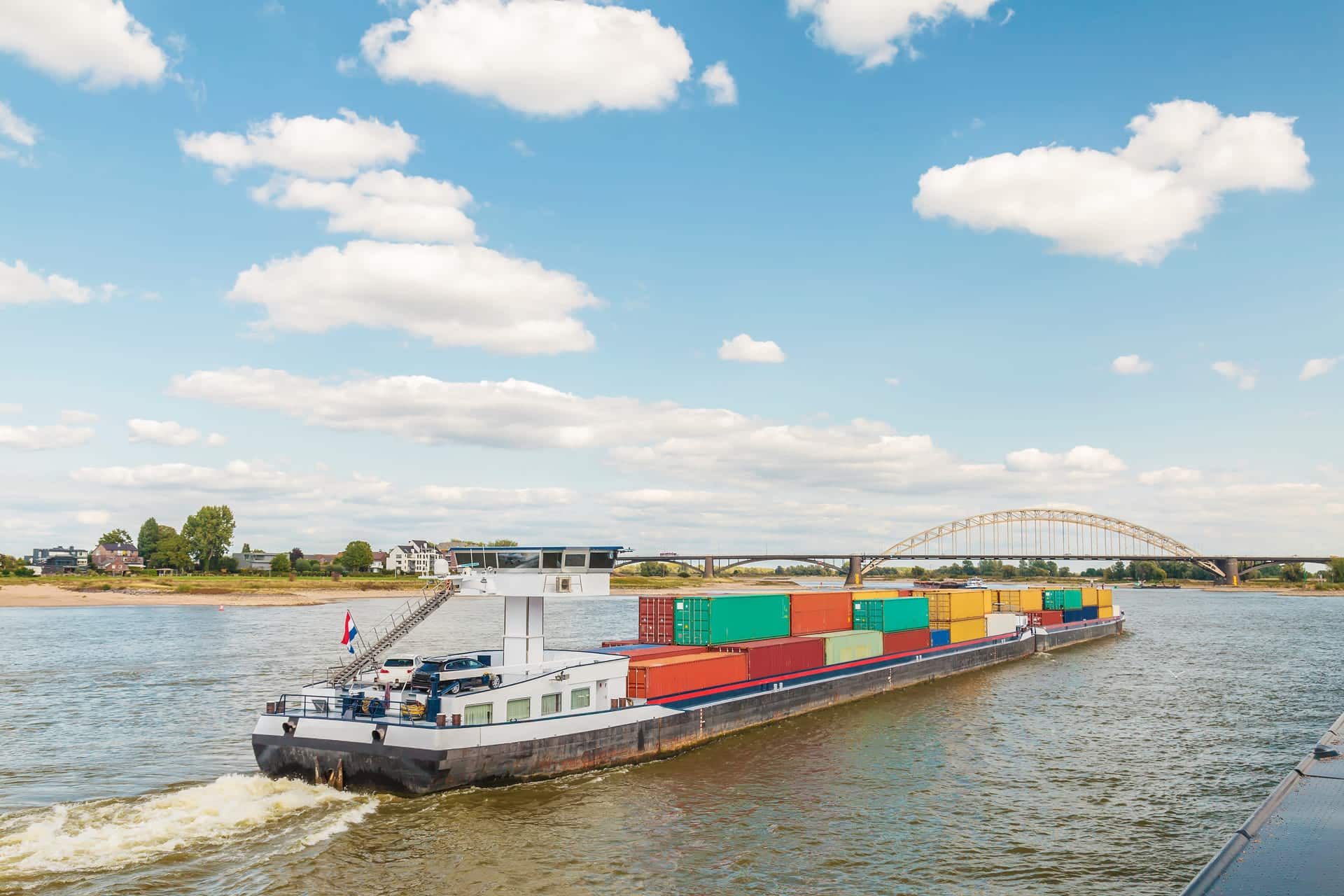
The Rhine barge freight market during 9–13 February moved decisively away from the hydrology-driven tightness seen earlier in the year. Rapidly improving water levels, particularly at Kaub and Maxau, shifted the balance of power back toward charterers, even as spot activity remained limited throughout the week.
Despite a modest increase in deal flow midweek, freight rates largely stabilized at lower effective levels, with only minor adjustments on select Upper Rhine routes. The dominant theme was not demand growth, but the restoration of full intakes, which fundamentally changed market psychology.
1. Freight Rates: Stable Start, Gradual Repricing Upstream
- 9 February: The week opened quietly, with hardly any new deals concluded. Market participants waited for confirmation of rising water levels at Maxau, which were forecast to increase significantly. Freight rates remained unchanged, but the expectation of higher intakes introduced clear downside risk for Upper Rhine routes.
- 10 February: Deal count increased modestly, yet demand remained subdued. Charterers postponed decisions pending further clarity on water levels. Forecasts indicated Maxau would exceed key thresholds, allowing materially higher intakes in the coming days. Despite this, deals were concluded at stable prices, keeping freight rates unchanged.
- 11 February: A sharp rise in water levels, particularly at Kaub, triggered significantly lower freight levels for Upper Rhine destinations. With nominations rising to approximately 2,000–2,200 tons, charterers were able to leverage abundant barge availability. Lower Rhine routes remained largely unaffected, highlighting the regional divergence.
- 12 February: Activity slowed again, with only one deal reported. Although water levels continued to rise across pegels, freight rates remained unchanged, reflecting a pause after the previous day’s repricing.
- 13 February: The week closed calmly, with full intakes now achievable across all Rhine destinations. Only a minor correction was observed on Frankfurt, while overall freight levels remained stable. Operators focused on weekend scheduling rather than chasing new spot business.
Takeaway: Freight rates followed a trajectory of stability, then a sharp upstream decline, before stabilizing again, driven almost entirely by hydrological recovery.
2. Water Levels: Structural Shift in Market Conditions
Hydrology was the decisive factor:
- Maxau rose above 600 cm during the week, with further volatility expected but generally supportive for higher intakes.
- Kaub increased sharply from very low levels to well above the thresholds required for full loading.
- Pegels such as Ruhrort and Cologne also showed consistent improvement.
Takeaway: The restoration of full loading capacity removed the logistical constraints that had supported elevated freight rates earlier in the month.
3. Market Activity: Calm and Selective
- Spot business was slow at the start of the week.
- Midweek deal counts improved slightly, but did not reflect strong demand.
- By Friday, activity returned to a typical pre-weekend lull, with most operators focused on fleet positioning.
Takeaway: Importantly, demand was described as sufficient to keep most barges employed, but not strong enough to restore pricing power.
4. Operational Context: Availability Expands as Intakes Recover
Operational dynamics shifted noticeably:
- Higher intakes increased effective supply, even without a rise in vessel count.
- Some barge owners struggled to secure employment as charterers became more selective.
- The anticipation of continued high-water levels reduced urgency across the market.
Takeaway: This structural expansion of effective capacity capped any attempt at rate recovery.
Conclusion
The Rhine barge freight market during 9–13 February marked a clear turning point from constraint-driven firmness to hydrology-enabled normalization. Rapidly rising water levels at Kaub and Maxau restored full intakes and shifted bargaining power back toward charterers, leading to a sharp midweek repricing on Upper Rhine routes. While overall deal flow remained limited and most freight rates stabilized toward the end of the week, the underlying structural change, higher intakes, and increased effective supply signal a softer tone moving into the second half of February. From here, freight direction will depend less on water levels and more on the strength of underlying cargo demand.
What’s next?
Are you ready to face your challenges head-on?
We now offer a FREE customized trial to our BargeINSIGHTS tool, an all-in-one platform for liquid bulk barge transport optimization.
With BargeINSIGHTS, you get instant insights into barge freight rates, bunker gas oil prices, water levels, vessel tracking, and barge availability—all in one place. No more time-consuming data collection; everything you need is at your fingertips.
Click here to schedule your demo and get access to BargeINSIGHTS for free!
